
New EU Construction Products Regulation (EU) 2024/3110: What Turkish Exporters Need to Know
Introduction: A Renewed Framework After 13 Years
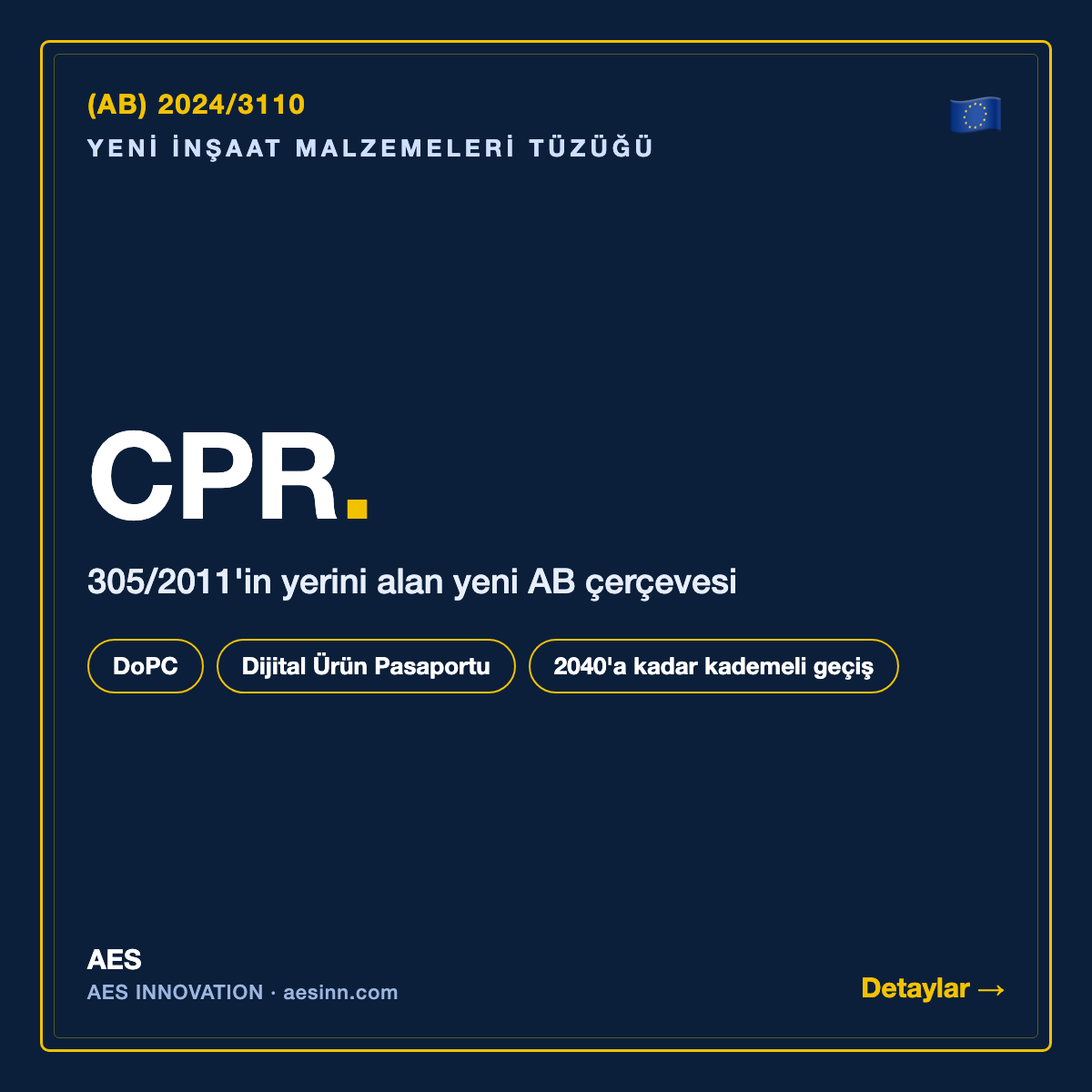
The European Union’s framework regulating construction materials was shaped by Regulation (EU) 305/2011, which had been in force since 2011. The new Construction Materials Regulation (EU) 2024/3110, adopted on 27 November 2024 and published in the Official Gazette (OJ) on 18 December 2024, gradually replaces this framework. The Regulation entered into force on 7 January 2025; however, this does not mean that all its provisions came into effect on that date.
The most striking feature of the new CPR is its long and multi-layered transition period. The old 305/2011 can remain in effect in parallel until January 8, 2040. This is not a change that happened overnight; it is a planned transformation spread over years. This article aims to objectively explain what the regulation means for Turkish manufacturers exporting products such as cement, thermal/water insulation, glass, steel structural elements, doors/windows, and ceramics to the EU.
Important note: This text is for informational purposes only and does not constitute legal advice. Specific obligations vary depending on the product category, the relevant harmonized technical specifications, and any secondary legislation (implementation/delegation of authority) issued by the Commission.
- Canonical reference: Regulation (EU) 2024/3110 — CELEX 32024R3110
- Legislation it replaced: (EU) 305/2011
- Published in OJ: December 18, 2024 · Effective: January 7, 2025
- General implementation: January 8, 2026 · Full repeal: January 8, 2040
What's Different with the New CPR?
The most significant innovation of the new regulation is the expansion of the old Declaration of Performance (DoP) approach. The declaration now encompasses not only the mechanical/technical performance of the product but also safety, environmental, and climate aspects, taking the form of a Declaration of Performance and Conformity (DoPC). In other words, the question of 'how durable is the product?' is now joined by the question of 'what is its environmental impact?'.
In addition, the responsibilities of economic operators (manufacturers, importers, authorized representatives, distributors) are being redefined and clarified; the harmonized system of technical specifications is being updated. The presentation of product information in digital and machine-readable format is becoming increasingly mandatory. This means that digital product information and labels are beginning to replace paper-based declarations.
- DoP → DoPC: Security, environmental, and climate features are added to the declaration.
- The obligations of economic operators (producers/importers/agents/distributors) are being restructured.
- Harmonized technical specifications and evaluation/verification systems are being updated.
- Digital and machine-readable product information/labels are taking center stage.
- The rationale behind CE marking is preserved; however, the scope of the declaration on which it is based is being expanded.
Digital Product Passport (DPP) and Sustainability
The new CPR introduces the Digital Product Passport (DPP) concept to construction materials, in line with the EU’s broader sustainability agenda (Ecodesign/ESPR framework, circular economy). The DPP aims to make information about a product (composition, performance, environmental data, compliance records, etc.) accessible in a digital and updatable format.
However, caution is advised here: DPP (Direct Product Protection) will not become mandatory overnight. The DPP obligation is expected to come into effect some time after the relevant DPP system technical infrastructure is established (one commonly cited timeframe is approximately 18 months after the system is created). It is important to emphasize that these dates will be clarified by product category-specific implementation acts and are still largely uncertain — therefore, we refrain from giving a definitive 'DPP obligation date'.
On the sustainability side, there is a trend towards declaring environmental performance (e.g., reporting environmental/climatic characteristics within the DoPC). This means that manufacturers will increasingly need data such as Environmental Product Declarations (EPDs) and life cycle assessments (LCA).
- DPP: Digital, updatable, machine-readable product information infrastructure.
- The obligation is not immediate — it will be implemented gradually after the DPP system infrastructure is established (≈18 months is the frequently cited timeframe; not definitive).
- Statements regarding environmental/climate performance are coming to the forefront → EPD/LCA data are gaining importance
- An architecture compatible with ESPR and the circular economy agenda.
- ⚠️ Product-specific exact DPP dates have not yet been finalized with the implementation agreements.
Key Dates and the Long Transition Period
Perhaps the most critical point for Turkish exporters is this: The new CPR is not a rushed regulation. The regulation entered into force on January 7, 2025 (some preparatory/definitive provisions are valid from that date), the general application date is January 8, 2026, and the complete repeal of the old 305/2011 extends until January 8, 2040. In other words, the two regulations will run parallel for a long period.
It's important to correct a common misconception: the January 8, 2027 date highlighted in the COOPE database is NOT the 'general application' date of the regulation. This date primarily corresponds to the date when the enforcement/penalty provisions (under Article 92) and audits and sanctions related to the environmental performance declaration will come into effect. General application is January 8, 2026. Understanding this distinction is crucial when planning your obligation calendar.
The phased transition will depend on the sequential publication of the new harmonized standards on a product family basis. Until the new system comes into effect for a product category, that category may continue to operate under the old 305/2011 framework. Therefore, the answer to the question 'when will it be mandatory for my product' depends on the publication schedule of the harmonized technical specification covering your product.
- December 18, 2024 — Published in OJ
- January 7, 2025 — Entry into force (some preparatory provisions are effective from this date)
- January 8, 2026 — General implementation date
- January 8, 2027 — Commencement of sanctions/penalties (under Article 92) and environmental performance declaration audits.
- January 8, 2040 — Complete repeal of (EU) 305/2011.
- ⚠️ Product-based transition depends on the publication schedule of the new harmonized standards — it varies from category to category.
What does this mean for Turkish manufacturers?
For a Turkish manufacturer exporting construction materials to the EU, the message is clear: planning, not panic. The long transition period offers a reasonable amount of time for preparation; however, postponing this period by saying 'there's still plenty of time' would be wrong. Internal processes, particularly those required for environmental data (EPD/LCA), digital product information infrastructure, and the transition to DoPC, take time.
Specifically, tracking the status of the harmonized technical specification covering your product is the most practical first step. Categories such as cement, insulation materials, glass, steel structural elements, door/window systems, and ceramics may each have a different timeline. It would be wise to review your existing CE file, technical documentation, and supply chain data flow, including any environmental characteristics.
Finally: This text provides objective information. Issues such as which conformity assessment method is applicable to a specific product, the date on which obligations arise, and the scope of the technical file should be determined by examining the current harmonized specification and the Commission's secondary legislation covering your product.
- Monitor the status and timeline of the harmonized technical specification covering your product.
- Establish your environmental data (EPD/LCA) collection and reporting capabilities early.
- Review your technical documentation and declaration processes for the DoP → DoPC transition.
- Prepare for a digital/machine-readable product information infrastructure (laying the groundwork for DPP).
- Create your category-based transition schedule — not all at once.
- For precise obligations, base your decisions on the current harmonized specification + secondary legislation.
Frequently Asked Questions
When did the new CPR (EU) 2024/3110 enter into force and when will it begin to be implemented?
The regulation was published in the Official Gazette on December 18, 2024, and entered into force on January 7, 2025. The general application date is January 8, 2026. Some preparatory and defining provisions are valid from the effective date.
Is the old Regulation 305/2011 being repealed immediately?
No. The transition is multi-stage. The old (EU) 305/2011 will be phased out gradually as the new harmonized standards are published sequentially on a product family basis, and may remain in parallel until exactly 8 January 2040.
What does January 8, 2027 represent?
This date is not the general implementation date. It primarily corresponds to the date when the enforcement/penalty provisions (within the framework of Article 92) and audits and sanctions related to environmental performance declarations begin. The general implementation date is January 8, 2026.
When will the Digital Product Passport (DPP) become mandatory for construction materials?
A precise date is not yet clear. The DPP obligation is expected to come into effect some time after the relevant DPP system infrastructure is established (a frequently cited period is approximately 18 months). Product-specific dates will be clarified in the Commission's implementing acts.
What is the difference between DoP and DoPC?
The old Declaration of Performance (DoP) primarily covered the technical/mechanical performance of the product. The new Declaration of Performance and Conformity (DoPC) adds safety, environmental, and climate characteristics, making the declaration more comprehensive.
This content is for informational purposes only and does not constitute legal opinion or compliance assessment. The current official legislation text (EUR-Lex) should be used for precise requirements.