

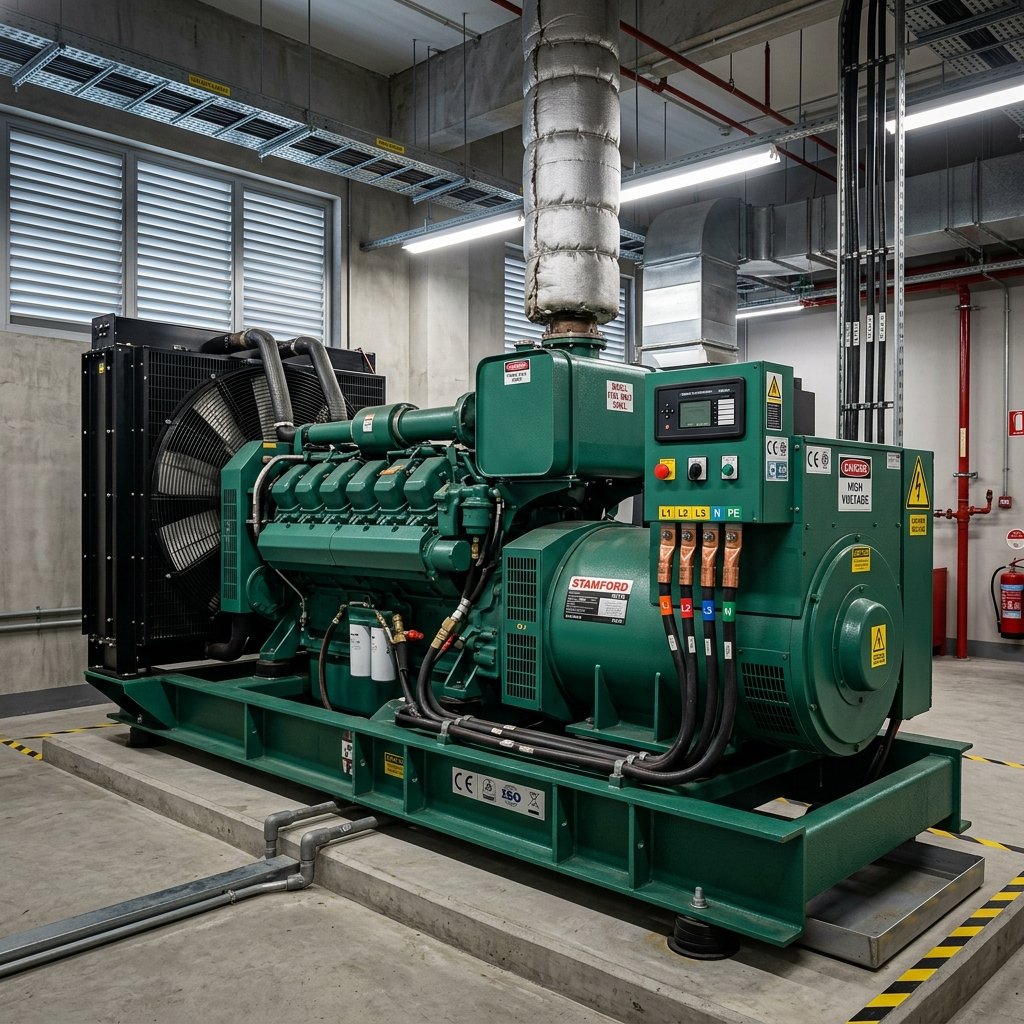
What is ISO 8528? Generator Power Classes, Safety (8528-13) and Periodic Inspection.
Short answer: The ISO 8528 series defines the power classification, performance, and... of diesel and natural gas generator sets. security It is a set of international standards defining power classes (ESP/PRP/COP/LTP) (formerly IEC 88528); mechanical, electrical and thermal safety of the generator and protective measures are also included in Part 1. Part 13 (Safety)‘It is organized in '...'.
Generators are the "life insurance" of hospitals, data centers, and factories. However, when evaluating a generator set, two critical questions must be asked simultaneously: Is it at the right strength? And Is it safe? The ISO 8528 series answers these two questions together; performance and safety are two sides of the same standard.
What does the ISO 8528 Series cover?
| Section | Subject |
|---|---|
| Part 1 | Power ratings and performance classes |
| Part 2 / 3 | Internal combustion engine and alternator requirements. |
| Part 5 | Overall performance of the generator set |
| Part 6 / 9 | Test methods, vibration measurement |
| Part 13 | Safety — protective measures and hazards |
Power Rating Classes (Part 1)
Choosing the wrong power class is the most costly mistake: if a 2000 kVA generator is rated as ESP instead of COP, the motor will be damaged when operated under continuous load.
| Class | Meaning | Typical usage |
|---|---|---|
| ESP | Emergency backup power | Backup system that kicks in when the mains power is interrupted (limited hours) |
| PRP | Continuous main power (variable load) | Main source in off-grid areas |
| RUBBISH | Continuous power (constant load) | 7/24 constant load (base load) |
| LTP | Power for a limited time | Limited number of full hours per year |
ISO 8528-13: Generator Safety
Part 13 describes the safety measures to protect people and the facility during the design, installation, and operation phases of a generator set. A generator is not merely a machine that produces power; it also contains high voltage, rotating mass, high temperature, and combustible fuel. It is a source of multiple dangers.. ISO 8528-13 categorizes these hazards and prescribes protective measures for each:
- Mechanical hazards: Fixed housings for rotating parts, belt-pulleys, and fans; preventing the risk of pinching and entrapment.
- Electrical hazards: Contact protection, grounding and equipotential bonding, insulation and suitability of protective devices.
- Thermal hazards: Insulating/marking hot surfaces and exhaust lines reduces the risk of burns.
- Fire and fuel safety: Fuel system features include leak protection, static electricity protection, and splash protection.
- Exhaust gas (CO) and ventilation: Safe exhaust discharge and adequate ventilation of the space.
- Noisy: Measures that comply with exposure limits.
- Emergency Stop: Accessible, clearly marked emergency stop device.
- Labeling and documentation: Warning signs, usage/maintenance instructions.
During periodic inspections, both safety and performance are tested.
For a generator to be truly reliable, it must both be able to deliver power and operate safely. AES periodic checks verify both of these.
- Load bank test: Verifying that the rated power is actually met and eliminating the risk of "wet stacking" (accumulation of unburned fuel) at low loads.
- Synchronization and automatic transfer (ATS): The transition from grid to generator was seamless.
- Grounding and protection: Grounding continuity and protection relay setting control.
- Emergency stop and safety devices: Functionality of emergency stops and containments according to ISO 8528-13.
- Exhaust/ventilation and fuel system: Visual inspection for safety reasons.
Which facilities are it critical for?
- Hospitals (legal backup power requirement)
- Data centers and IT infrastructures
- Production facilities (continuity of production)
- Shopping malls, hotels and high-rise buildings
AES's Generator Inspection Process
- Verification of the correct power class (ESP/PRP/COP) according to the operating scenario.
- Safety (mechanical/electrical/thermal) inspection under ISO 8528-13.
- Load bank, synchronization and electrical measurements.
- Grounding, protection and emergency shutdown tests.
- TURKAK accredited periodic inspection report and improvement recommendations.
Relating to: Generator Periodic Inspection service
Frequently Asked Questions
How often should a generator undergo periodic inspection?
Periodic inspection of generators under work equipment regulations. at least once a year should be performed; load bank testing is more frequently recommended in critical facilities.
What is the difference between ISO 8528-1 and 8528-13?
Part 1 of the generator power and performance its classification; Part 13 is security (mechanical, electrical, thermal protective measures) are regulated. One says "sufficient power," the other says "safe operation.".
The rated power is sufficient, but the generator can't handle the load, why?
It is usually due to incorrect power class selection or insufficient AVR/governor regulation. Load bank testing reveals the true capacity.
Document the power and safety of your generator together.
Prove that your generator is correctly classified and meets ISO 8528-13 safety requirements through accredited testing. Related service: Generator Periodic Inspection.