

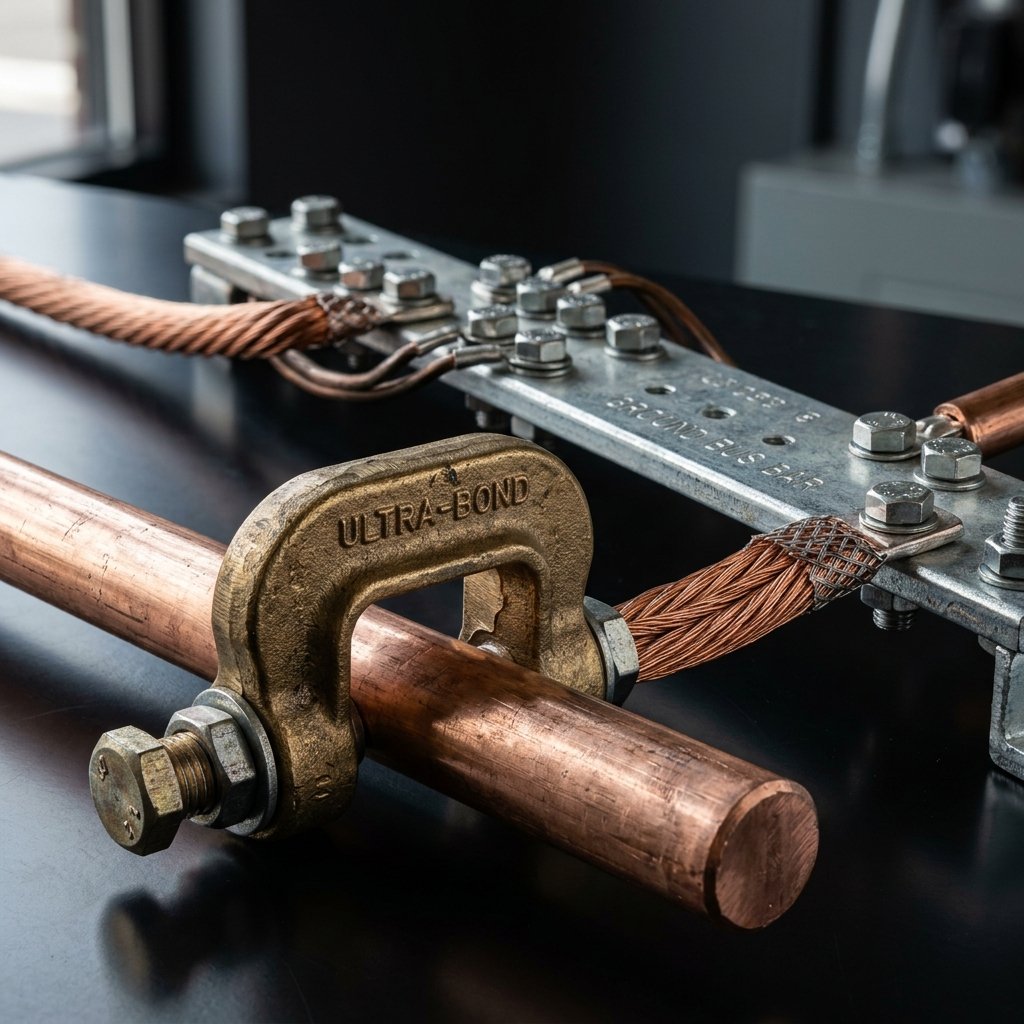
What is IEC 62561? Components of Lightning Protection Systems (LPSC)
Short answer: The IEC 62561 series is a quality and testing standard that defines the resistance of all components of a lightning protection system (LPS)—terminals, conductors, grounding electrodes, arresters, spark arresters, and surge counters—to lightning current, mechanical forces, and corrosion. In short: IEC 62305 designs the system, while IEC 62561 guarantees that each part of that system can perform its function.
The most common and costly mistake in lightning protection is focusing on the system as a whole and ignoring the quality of the components. However, during a lightning discharge, every link in the chain, from the lightning arrester on the roof to the ground, must be considered simultaneously. tens of thousands of amperes It must carry the current. A single weak link in this chain—an uncertified clamp, a conductor with insufficient cross-section, or a corroded connection—can render the entire investment useless. That's why IEC 62561 makes the system safe 'in the field,' not 'on paper,' by requiring each of these links to be tested under real lightning conditions.
The ability of a component to carry lightning current is a far more demanding requirement than it appears. Current generates heat as it passes through the conductor's cross-section; if the cross-section is insufficient, the metal melts locally or the junction vaporizes. Simultaneously, high currents passing through parallel conductors cause them to repel/attract each other. electrodynamic forces It creates and can physically break a loose connection. Moreover, all this must be achieved despite years of corrosion outdoors, under rain, salt and UV light. These three pressures — thermal, mechanical and environmental — form the basis of the IEC 62561 test philosophy.
Which components are covered by the IEC 62561 series?
| Section | Component | What does it guarantee? |
|---|---|---|
| 62561-1 | Connection components (terminal blocks, clamps) | The connection must carry the current without overheating/breaking. |
| 62561-2 | Conductors and grounding electrodes | Correct cross-section, material and corrosion resistance. |
| 62561-3 | Insulated spark arresters | Controlled potential equalization |
| 62561-4 | conductor fasteners | Mechanical stability |
| 62561-5 | Grounding inspection boxes | Access to periodic measurements |
| 62561-6 | Lightning strike counters | Real coup record |
| 62561-7 | Grounding improving compounds | Low and stable soil resistance. |
What tests do the components undergo?
In electrical withstand testing The component is subjected to defined lightning impulse current classes (e.g., high 'H' or normal 'N' levels) and verified to carry this current without melting, welding, or permanently increasing its resistance. In mechanical testing The connection is subjected to loads that simulate the forces generated by the discharge and the installation stresses; torque loss and slippage are checked. In corrosion test The component is then subjected to salt spray and accelerated aging cycles, proving that it will retain its properties for years under outdoor and underground conditions. A component that fails these tests becomes the point where the chain breaks at the first major lightning strike.
Relationship with IEC 62305: Design and Components Go Hand in Hand
IEC 62305 calculates the risk level of a building and specifies which protection level (LPL I–IV) is required and how the system should be designed. However, this design is only possible if... With components compliant with IEC 62561. When implemented correctly, it provides real protection. The two complement each other: the right design + certified components = a reliable system. The absence of one renders the other worthless; because a perfect design will fail in the field if implemented with a low-quality clamp.
The Importance of Component Inspection in Periodic Inspections
The annual periodic inspection of lightning protection systems is often mistakenly thought to be merely a 'grounding resistance measurement'. However, a comprehensive inspection must also assess the condition of the components. A corroded connection, even if it shows low resistance at the time of measurement, will withstand a real discharge under the impulse current. by throwing a back It may become inoperable. Similarly, loose retainers, broken down conductor segments, or mismatched material connections (galvanic corrosion) should be inspected visually and by measurement. In AES's accredited inspection, component conformity (IEC 62561) and system performance (IEC 62305) are reported together; thus, the protection remains truly valid not only on the day of installation but every year thereafter.
Frequently Asked Questions
What is the difference between IEC 62305 and IEC 62561?
IEC 62305 lightning protection system design and performance; IEC 62561, on the other hand, defines that system. testing and quality requirements of components They define the terms. One draws the plan, the other ensures the bricks are solid.
Are the components of my current lightning protection system suitable?
This can only be demonstrated by on-site inspection. Component type, cross-section, material compatibility, and corrosion status are evaluated during periodic inspections; nonconformities are reported in a prioritized report.
My grounding resistance is coming out as good, will that still cause a problem?
Yes. A good resistance measurement does not guarantee that components will carry lightning surge current. Low resistance is necessary but not sufficient; component integrity must also be checked.
Secure Every Part of Your Lightning Protection
Document both the design (IEC 62305) and component conformity (IEC 62561) of your lightning protection system through TÜRKAK accredited inspection. Related service: Lightning Protection Services.